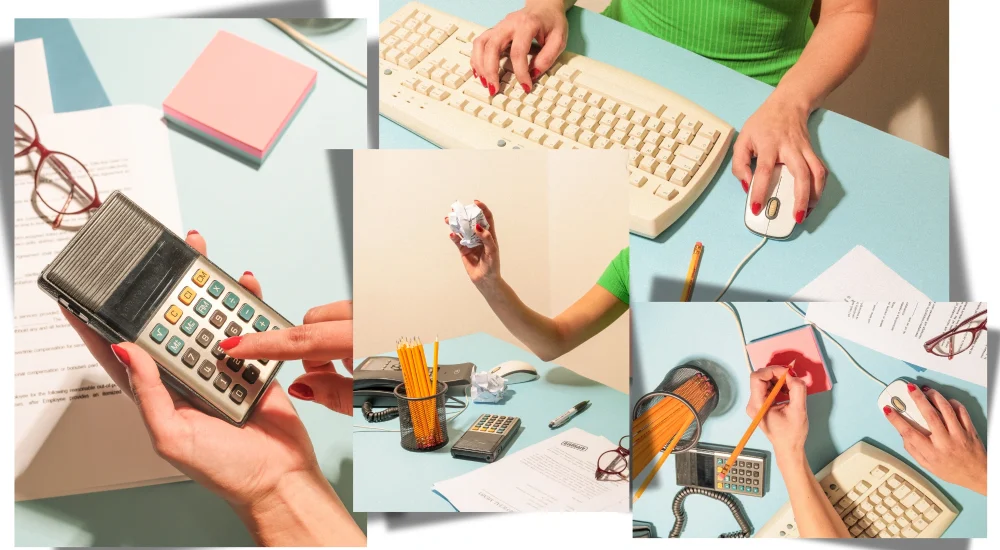
When a desk is crowded, it becomes easier to:
- Miss important documents
- Use outdated paperwork
- Duplicate work
- Forget follow-ups
- Lose track of priorities
In admin-heavy offices, even small errors can have real consequences. A misplaced file or overlooked form can delay billing, approvals, or client responses.
Clear desks reduce visual noise, making it easier to focus on what actually matters and get it right the first time.
Many offices aim to be “paper-light” or fully digital, but cluttered desks often tell a different story.
Paper piles usually mean:
- Unclear digital storage
- Inconsistent naming conventions
- Staff unsure whether something is saved, sent, or finalised
A cleaner desk often signals confidence in digital systems. If staff trust that documents are, stored correctly, easy to retrieve, backed up and accessible when needed.
There’s less need to keep physical “just in case” copies everywhere.
Clean desks don’t create good digital systems, but they’re a strong sign that good systems already exist.
When work changes hands, due to leave, role changes, or growth; desk clutter becomes a risk.
Messy desks make it hard for others to:
- Understand what’s in progress
- Find relevant documents
- Pick up tasks without interruption
Clean, organised desks support smoother handovers. They reflect shared systems rather than personal workarounds. That’s a key marker of an office that’s built to scale, not just survive.
A clean desk doesn’t require expensive solutions or rigid rules. Often, it just needs the right tools.
Simple desk organisers, trays, cable management, and drawer systems make it easier for staff to keep surfaces clear without losing functionality. Options like those found in places such as IKEA or Officeworks make it easier to create a setup that supports how people actually work.
There’s also a practical cleaning benefit that often gets overlooked.
When desks are covered in items, cleaners can only clean around them, not properly clean the surface itself. That limits:
- Dust removal
- Disinfection of high-touch areas
- Overall hygiene standards
Clearer desks allow for:
- Proper surface cleaning
- More effective sanitising
- Better results without extra time or cost
From an operational perspective, desk cleanliness helps cleaning services do their job properly, especially in offices focused on health, presentation, and consistency.
Ultimately, clean desks aren’t about control or micromanagement. They reflect a workplace where:
- Systems are trusted
- Processes are clear
- People respect shared spaces
- Work is structured, not chaotic
That maturity shows up everywhere, from productivity and morale to how the office feels for staff and visitors alike.
The most successful offices don’t enforce clean desks with signs or policies alone. They support cleanliness by building systems that make organisation the easy option.
-
Office Systems, Workplace Productivity