Maybe your office cleaning is slipping.
Your cleaner is still coming, but things are being missed.
Corners aren’t as sharp. Kitchens fall behind. Bathrooms don’t hold their standard between visits.
Or maybe you don’t have a cleaner at all. Your business has grown. More staff. More clients. More foot traffic. Cleaning used to be manageable until it suddenly isn’t.
On the surface, this looks like a cleanliness issue.
In reality, it’s a cost issue.
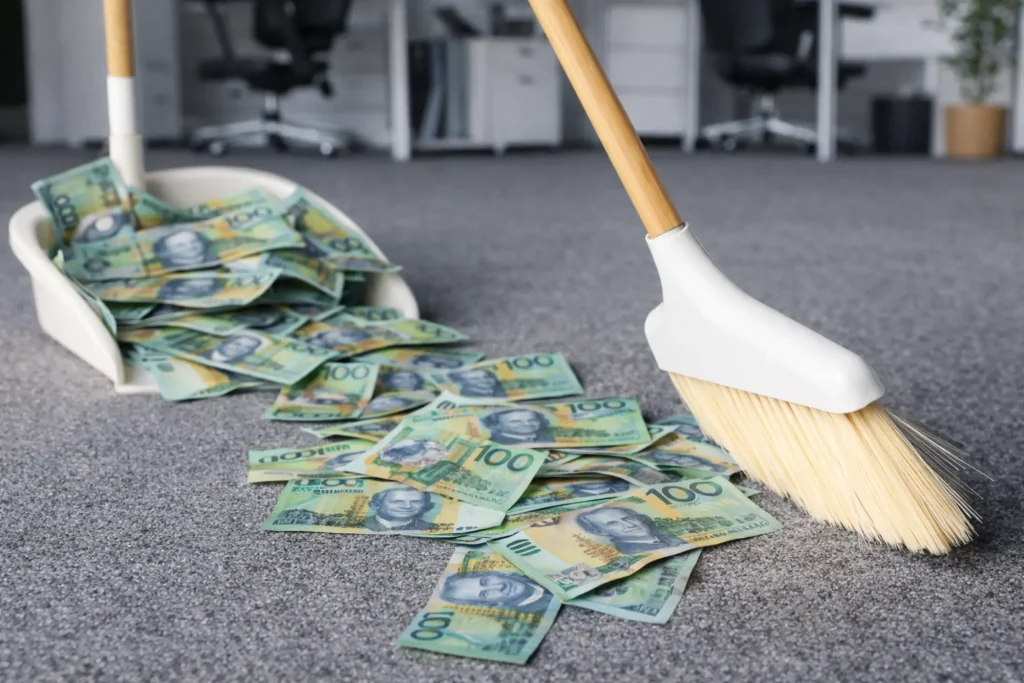
When regular commercial cleaning slips, costs don’t disappear.
They shift into longer cleans, higher maintenance spend, earlier replacements, and disruption to your business.
This is how most commercial cleaning problems begin. Not with a major failure, but with small gaps that quietly increase operating costs over time.
In a commercial workplace, cleanliness doesn’t decline slowly.
It compounds.
Shared spaces are used every day. Dirt, dust, oils, and residue build up whether cleaning happens or not. When regular cleaning is reduced, delayed, or inconsistent, that buildup carries forward into every following week.
A missed week doesn’t just mean one less clean.
It means:
- Floors build up dirt and grime, accelerating wear on carpets and hard flooring and increasing the need for deeper, more expensive cleaning
- Kitchens build up bacteria, requiring longer cleans rather than routine wipe-downs
- Bins aren’t emptied on schedule, leading to odours and spillover that take extra labour to resolve
- Bathrooms accumulate filth, shifting from quick servicing to time-consuming recovery work
At this point, cleaning is no longer maintaining a standard.
It is correcting decline which means more time per visit and higher cost to achieve the same outcome.