Let’s talk about shared spaces, especially kitchens.
They’re meant to be places where people take breaks, reset, chat and recharge. But when they’re dirty, cluttered or unhygienic, they do the opposite.
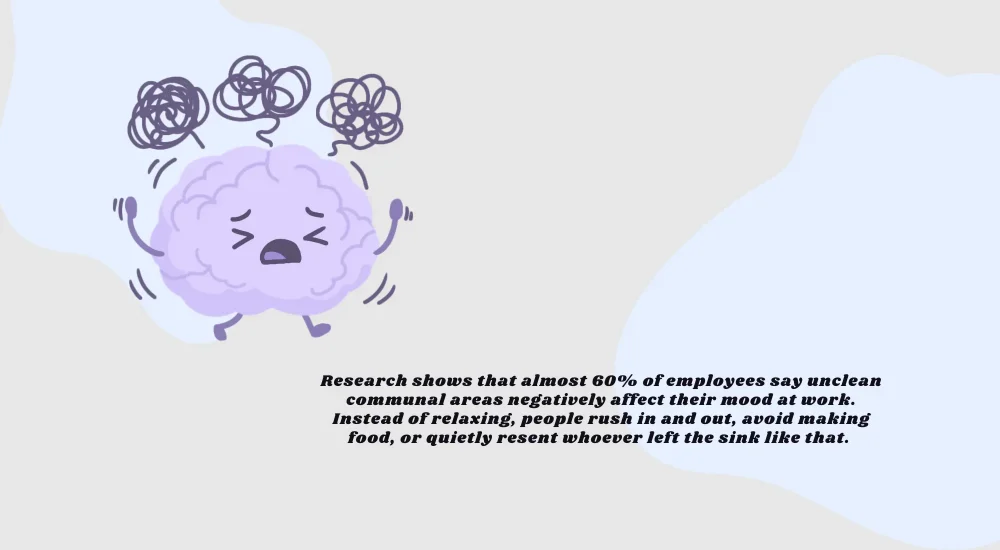
Research shows that almost 60% of employees say unclean communal areas negatively affect their mood at work. Instead of relaxing, people rush in and out, avoid making food, or quietly resent whoever left the sink like that.
Mental wellbeing at work isn’t only about bean bags or free fruit bowls. It’s also about how supported people feel in their everyday environment.
Employees tend to interpret clean, well-maintained offices as a sign that their organisation cares. Messy or neglected spaces, on the other hand, can send the opposite message, even if no one ever says it out loud.
Workplace studies consistently show that when people feel valued and supported, they’re more engaged, more motivated and more likely to stay.
A clean office won’t replace good leadership, but it definitely helps.
There’s also a link between cleanliness, wellbeing and time off work. Cleaner workplaces are associated with lower absenteeism, not just because fewer germs are circulating, but because stress levels are lower overall.
When people feel comfortable in their environment, they’re less drained by the end of the day and more resilient to everyday pressures.
Small improvements in cleanliness can quietly support both physical and mental health over time.
Before anyone panics, no, your office doesn’t need to look like a showroom. A bit of personality, mess and lived-in energy is normal.
What matters is consistency. Clean desks, hygienic shared spaces, and an environment that feels looked after rather than neglected.
When an office feels calm and intentional, people feel calmer too.
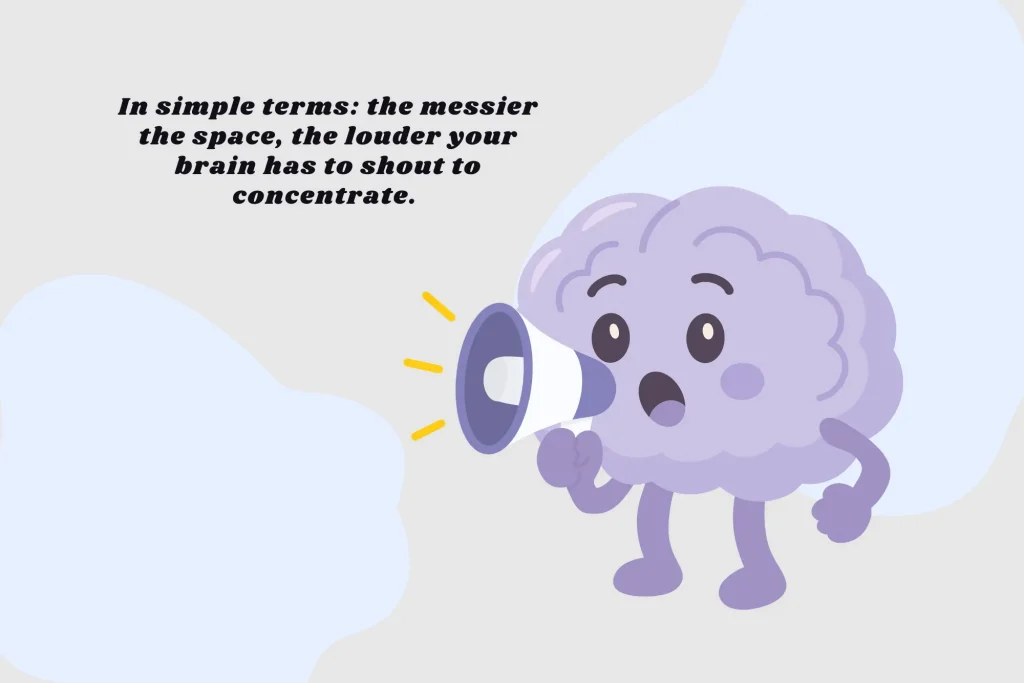
Clean offices don’t just protect health or impress visitors. They make work feel easier on the brain.
Less stress. Better focus. Fewer silent frustrations. And a workplace that feels like it actually cares about the people in it.
And honestly, that’s a pretty good return for something as simple as keeping things clean.
-
office productivity, workplace wellbeing