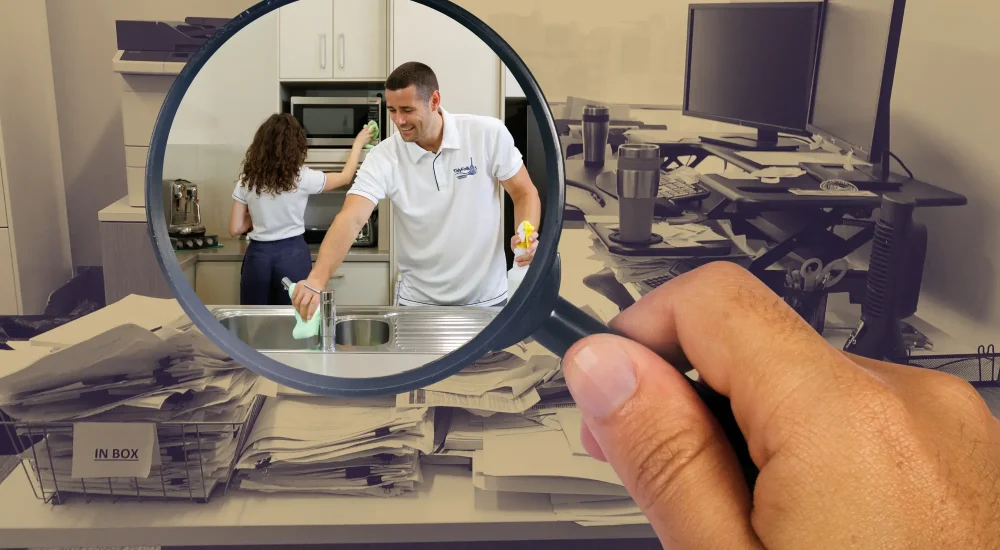
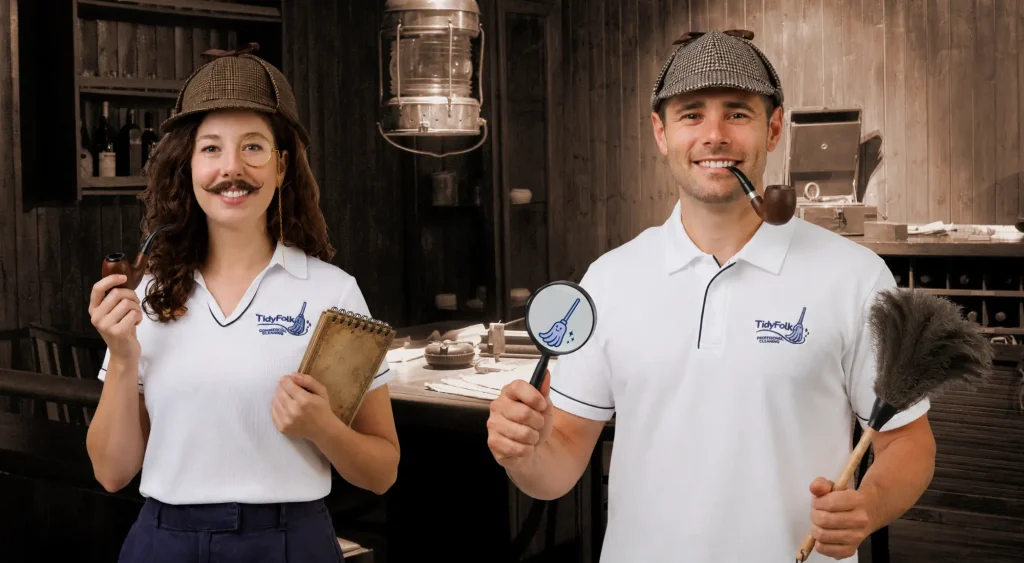
When Shelley and I walk into an office for the first time, we’re not looking at the floors.
We’re looking for clues.
Not clues about whether the office is dirty, but clues about how well it’s actually being cleaned.
The funny thing is, most businesses judge their cleaner by the obvious things. The bins are empty. The carpets have vacuum lines. The kitchen benches have been wiped down.
But that’s only half the job.
Within the first minute, we can usually tell whether a cleaner is taking pride in their work or simply doing the quickest possible version of an office clean.
Could Your Office Pass the 60-Second Test?
Take a minute and have a look around your office.
Not at the obvious things, but at the places most people never think to check.
- Run your finger across the top of a photo frame, computer monitor, cupboard door or window sill. Is there a layer of dust?
- Turn your office chair around and look at the back and underneath. Has dust built up?
- Lift a couch cushion in your reception area. Is there dirt, crumbs or debris underneath?
- Look behind the toilet bowl and around the base. Is there grime where nobody normally looks?
- Check the glass on your front entrance. Is it covered in fingerprints?
- Look around the kitchen or bathroom sink waste. Is there black grime around the drain, or does it smell unpleasant?
- Look behind your computer monitor or desk accessories. Has dust been building up because nothing ever gets moved?
None of these areas take long to clean.
They’re the places that get skipped when someone is rushing or it’s not in their standard clean.
The Day We Heard Another Cleaner Working
One day we were carrying out an eight-hour office deep clean when we heard the cleaner for the business across the hall arrive.
Within seconds we heard the vacuum cleaner start.
Then the mop.
About 15 minutes later they packed up and left.
Now, we can’t say exactly what happened because we weren’t inside their office. But we never heard furniture being moved. We never heard desks being wiped down. There was no glass cleaning or anything else that you’d expect during a thorough office clean.
It sounded like they vacuumed, mopped, and left.
That isn’t what we consider an office clean.
Vacuuming and mopping are important, but they’re the final part of the job, not the whole job. A proper office clean starts at the highest surfaces and works its way down.